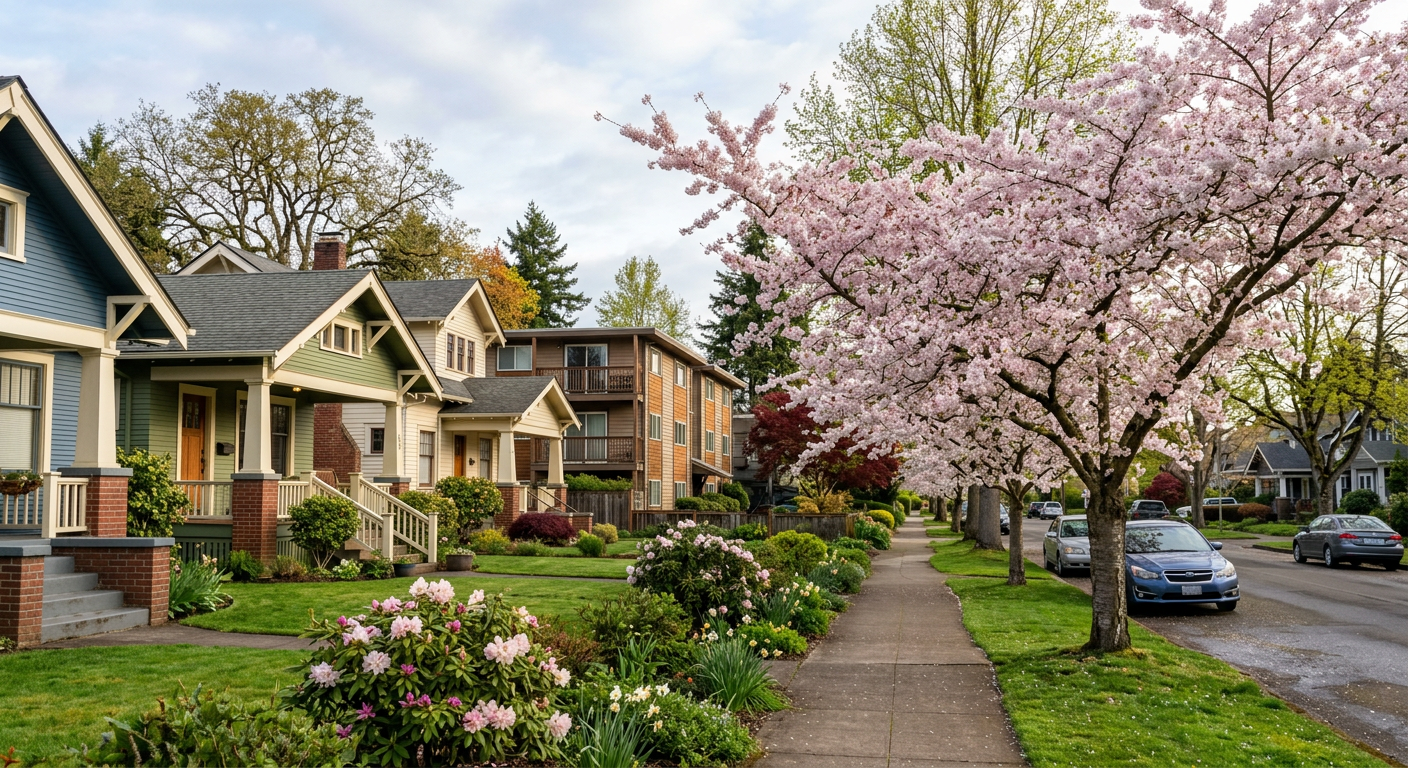
Spring hits Salem and everything moves fast. The cherry trees along Commercial Street start blooming. Listings pop up in Morningside, Grant, and all over South Salem. People start touring apartments on Saturday and signing leases by Monday. I get it — good rentals go quick here. But before you rush, there are real questions to ask before signing a lease in Salem Oregon that most people skip. Then they regret it three months later.
So take a breath. Grab some coffee. Let’s walk through five things worth slowing down for.
What is actually included in the rent?
This is the first question, and also the one people assume they already know the answer to. They see "$1,200/month" on the listing and build their budget around that number. Then move-in day comes, and suddenly the real number is $1,340.
Here is how that happens in Salem. Many apartment complexes include water and sewer in the rent, but not electricity or gas. However, some of the older units near Lancaster or along Portland Road cover nothing at all. You pay for every utility separately. So ask upfront — what is included and what is not.
Also, ask about parking. Some Salem apartments give you one spot and charge $25 to $50 for a second one. Others have open lots with no assigned spaces. If you are renting a duplex or a single-family home in West Salem or Keizer, parking might not even come up in the lease. But storage could. Some landlords include a garage or a shed. Others charge extra for it.
Then there are pet fees. Most Salem rentals that allow pets charge a monthly pet rent on top of a deposit — usually $25 to $50 per animal per month. Some places cap the number of pets. Others restrict breeds. If you have a dog, read the pet section of the lease carefully. Because "pet-friendly" in the listing does not always mean friendly to your pet.
Here is one more thing people miss — especially with single-family rentals. Some leases in Salem make the renter responsible for lawn care, gutter cleaning, or even minor landscaping. That is legal. But you need to know about it before you sign, not when the landlord calls in July asking why the grass is two feet tall.
The bottom line: read the lease line by line. Add up every cost that is not included in the base rent. That is your real monthly number.
What does the lease say about maintenance and repairs?
This one matters more than people think. Because everything works fine on move-in day. The problems show up later — a leaky faucet in October, a heater that quits in December, a garbage disposal that stops working after Thanksgiving.
So before you sign, ask these questions. Who do you contact for repairs? Is there a maintenance portal or just a phone number? What is the expected response time? And what happens after hours — if your heat goes out at 11 PM on a Friday in January, who do you call?
Oregon law is actually pretty clear on this. Under Oregon’s habitability standards, your landlord is responsible for keeping the unit livable. That means working heat, functional plumbing, weatherproofing, and safe electrical systems. These are not optional upgrades. They are baseline legal requirements.
But here is where it gets tricky. The law says landlords must make repairs within a "reasonable time." In practice, that is usually 24 to 48 hours for urgent issues like no heat or a burst pipe. For non-urgent problems, it could take longer. If your landlord does not respond, put every request in writing. Send an email or a text so you have a timestamp. Because if it ever becomes a dispute, documentation is the only thing that counts.
One more thing to understand — the difference between normal wear and damage. Scuff marks on the wall from furniture are normal wear. A hole punched in the drywall is damage. Worn carpet in a high-traffic area after three years is wear. A large stain from a spill you never cleaned is damage. Oregon law recognizes this difference, and it matters when your deposit is on the line.

Questions to ask before signing a lease in Salem Oregon about renters insurance
Here is something that has changed in the last few years. More and more Salem landlords now require renters insurance as a condition of the lease. If your lease says you need it and you do not have it, you are technically in breach from day one. That gives your landlord grounds to start the eviction process, even if you are paying rent on time.
But honestly, even if your landlord does not require it, you should probably have it anyway. Here is why.
Renters insurance covers your belongings if something goes wrong — fire, theft, vandalism. Say someone breaks into your apartment and takes your laptop, your TV, and some jewelry. Your landlord’s insurance covers the building. It does not cover your stuff. That is on you.
It also covers liability. For example, if a friend visits your apartment and slips on a wet floor, their medical bills could land on you. Renters insurance helps cover that. Most policies also include temporary housing costs. So if a kitchen fire makes your unit unlivable for two weeks, you are not sleeping on a friend’s couch — your policy helps pay for a place to stay.
Now, what it does not cover. Flooding is the big one. Standard renters insurance does not cover flood damage. That requires a separate policy. If you are renting near Mill Creek or in any low-lying area of Salem, this is worth knowing.
The cost is lower than most people expect. In Oregon, the average renter pays about $15 to $25 per month. For what you get, that is a reasonable deal.
For more detail on whether you legally need coverage, you can read about Oregon law on renters insurance — it breaks down what is required and what is just strongly recommended.
If you want to sort out the insurance question while you’re at it, Christian Sammons has been on Portland Road for 24 years. His team is bilingual. You can call (503) 390-5343 or go to sammonsagency.com — they’ll give you a straight answer.
What are the rules around rent increases and early termination?
Oregon has some of the stronger tenant protections in the country, but they are not unlimited. So it is worth understanding exactly what the rules are before you sign.
First, rent increases. Oregon law requires landlords to give 90 days written notice before raising rent. Also, for most properties built before February 2025, there is a cap on how much rent can increase each year — currently 7% plus the Consumer Price Index. So your landlord cannot double your rent overnight. But they can raise it, and 90 days goes by faster than you think.
Next, understand the difference between a fixed-term lease and a month-to-month agreement. A fixed-term lease locks in your rent for the full term — usually 12 months. Your landlord cannot raise the rent or end the lease early without cause during that period. A month-to-month agreement gives you more flexibility, but it also gives your landlord more flexibility. Either side can end it with proper notice.
Oregon no-cause eviction rules have changed in recent years. For most tenancies beyond the first year, landlords must provide a reason to end the lease. During the first year, however, the rules are different and a no-cause notice may still apply. Oregon Law Help is a solid free resource for understanding your rights as a tenant.
Early termination — this is the question nobody asks until they need the answer. Say you sign a 12-month lease in April and then get a job offer in Portland in July. There are generally three options. First, some leases include a buyout clause — you pay one or two months rent as a fee and walk away. Second, you can find a replacement tenant who meets the landlord’s approval. Third, if neither of those applies, you may owe rent for the remaining months of the lease. Read the early termination section before you sign. Not after.
Have you actually walked the unit and documented everything?
This is the step that saves people the most money and causes the most regret when skipped. Bring your phone. Take photos and video of every room.
Walls and floors: Look for scuffs, stains, cracks, or any existing damage. Photograph all of it. Windows and doors: Open and close each one. Check the locks. Look for drafts, cracked glass, or broken screens. Appliances: Turn on the stove, run the dishwasher, open the fridge. Check that everything works. Water pressure: Turn on the kitchen faucet, the bathroom sink, and the shower. Flush the toilet. Check under sinks for leaks. Light switches and outlets: Flip every switch. Plug your phone charger into outlets around the unit. Dead outlets are common in older Salem rentals. Signs of mold or moisture: Check under sinks, around windows, and in closets.
After the walkthrough, send your photos and notes to the landlord in a timestamped email. This creates a written record of the unit’s condition on move-in day. Under Oregon law, your landlord has 31 days after you move out to return your deposit or provide an itemized list of deductions. If they try to charge you for damage that already existed when you moved in, your photos and that email are your proof. Without them, it becomes your word against theirs.
And if a landlord wrongfully withholds your deposit, Oregon small claims court is a real option. Filing fees are low, and you do not need a lawyer. The key is having documentation — which starts on the day you walk the unit.

Take your time this spring
Spring is a great time to find a new place in Salem. The weather is better for moving. More listings open up. The energy feels right. But that same energy can push people into signing before they are ready.
Read the whole lease. Ask every question on this list. Document the unit before you move in. Know your rights under Oregon law. And do not let the pace of the market pressure you into skipping the details that matter most.
When you are ready to sign, sign with confidence — because you did the work first.
Christian Sammons and his team are at 4660 Portland Rd NE, #102, in Salem if you need help with the renters insurance side of things. Call (503) 390-5343 or visit sammonsagency.com. They have been in that same spot for 24 years.
Also worth reading: Oregon’s ORS 90.222.
Disclaimer: This article is for general informational purposes only and does not constitute legal, financial, or insurance advice. Coverage options, rates, and requirements may vary based on individual circumstances. Oregon insurance laws and regulations are subject to change. For personalized advice about your specific insurance needs, please contact a licensed insurance agent. Christian Sammons is a State Farm Insurance Agent licensed in Oregon, Washington, and California. State Farm, Bloomington, IL.
Leave a Reply