
Moving from California to Oregon? Here’s What Changes with Your Insurance
Every year, thousands of people move from California to Oregon. In fact, many of them land right here in Salem and the valley. Maybe it’s the lower cost of living. Maybe it’s the slower pace. Maybe you just really like rain.
Whatever brought you here, your insurance needs a real look. California and Oregon play by different rules. In fact, the differences are bigger than most people expect.
Here’s what you need to know before the boxes are even unpacked.
You Have 30 Days — Starting When You Establish Residency
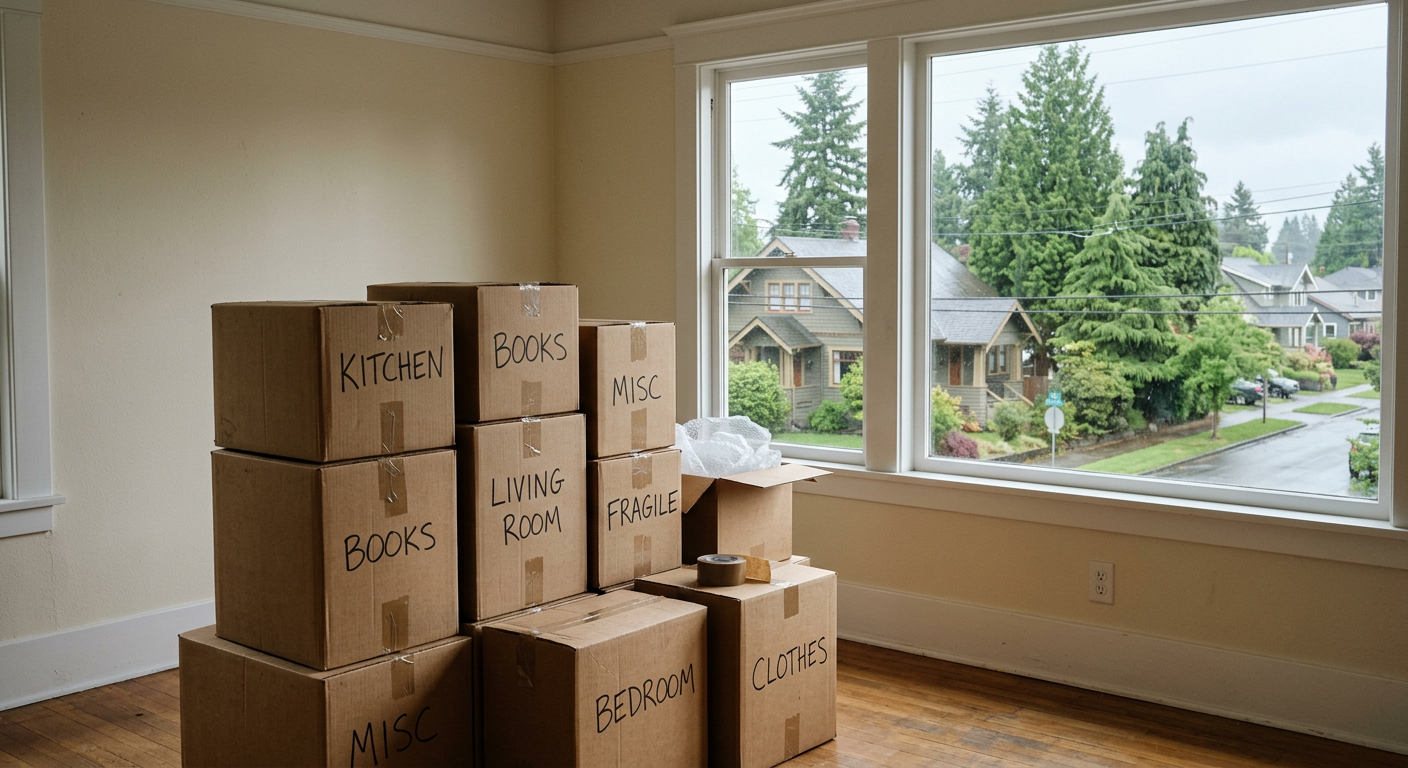
The clock doesn’t start the second you cross the state line. Instead, it starts when you establish residency in Oregon. In other words, you’ve moved here to stay. You work here. Your kids are enrolled in school. Or you’ve signed a lease or closed on a home.
Oregon treats residency as an intent question. If this is your home now, you’re a resident.
Once that’s the case, you have 30 days to:
- Get an Oregon driver’s license
- Register your car in Oregon
- Switch to an Oregon auto insurance policy
Why You Can’t Rely on Your California Policy
Your California policy won’t cover you here for long. Most policies have a built-in out-of-state clause. That clause adjusts your coverage to Oregon’s minimums temporarily. However, it’s a bridge — not a solution.
This clause is designed for road trips, not for people who’ve moved. So once Oregon is home, you need an Oregon policy. Don’t wait.
Auto Insurance: What Oregon Requires That California Doesn’t
Minimum Coverage Limits Compared
Oregon’s minimum requirements are higher than California’s across every category. Here’s a side-by-side look:
| Coverage | California Minimum | Oregon Minimum |
|---|---|---|
| Bodily Injury (per person) | $15,000 | $25,000 |
| Bodily Injury (per crash) | $30,000 | $50,000 |
| Property Damage | $5,000 | $20,000 |
| Personal Injury Protection (PIP) | Not required | Required — $15,000 minimum |
| Uninsured Motorist | Not required | Required |
What Is PIP and Why Does Oregon Require It?
Personal Injury Protection — PIP — is one of the biggest differences. California doesn’t require it. Oregon does.
PIP covers your medical bills after an accident, regardless of who caused it. If you get hurt in a crash, your PIP kicks in first. It pays before health insurance and before the other driver’s liability coverage. Additionally, it can cover lost wages if you can’t work while you recover.
Oregon’s minimum is $15,000 in PIP coverage. However, many people choose more. It’s a meaningful protection that California drivers don’t have by default. So when you set up your Oregon policy, you’ll choose your PIP limit. Because of that, it helps to understand what PIP does before that conversation.
Uninsured Motorist Coverage
Oregon also requires Uninsured Motorist (UM) and Underinsured Motorist (UIM) coverage. If someone hits you and they don’t have insurance, your UM coverage protects you. Similarly, if they don’t have enough insurance, your UIM coverage fills the gap. California doesn’t mandate either one. Oregon does.
The Good News: Oregon Rates Are Often Lower
Even with higher minimum requirements, many people find their car insurance bill drops after the move. California has some of the highest auto insurance rates in the country. The litigation environment, traffic density, and metro theft rates all drive premiums up.
Salem doesn’t have any of that. There’s less congestion and lower claim frequency. Lawsuits tend to be smaller too. As a result, if you were paying California rates for years, Oregon will probably feel like a relief.
Of course, the exact number depends on your driving history and your car. It also depends on what coverage you choose. But the direction is almost always the same — lower.
You can see more about what car insurance looks like in Salem if you want a better feel for the local market.
What to Bring to Your Insurance Appointment
Getting set up is quick when you come prepared. Here’s what helps:
- Your current California policy declarations page — shows your existing coverage, limits, and deductibles
- Your Oregon address — even a lease agreement or utility bill works
- Vehicle info — year, make, model, VIN for each car you’re insuring
- Driver’s license numbers — for everyone in your household who drives
- Lienholder info — if you have a car loan or lease, they need to be listed on the policy
The appointment usually takes about 20 minutes. Having those items ready makes it even faster.
What Changes vs. What Stays the Same
Not everything flips when you cross the border. Here’s a plain breakdown:
What changes:
- Your coverage minimums — Oregon requires more
- Required coverage types — PIP and UM/UIM are now mandatory
- Your rate — likely lower, but based on your profile
- Your insurer may differ — not all California carriers operate in Oregon
What stays the same:
- Your claims history follows you — a clean record still means good rates
- Your credit score still factors in — Oregon allows it
- Your deductibles — you keep whatever you choose
- Bundling home and auto still saves money — that discount carries across states
- If you had State Farm in California, your history carries over — we pick up right where your last agent left off
Home and Renters Insurance: Does That Change Too?
Homeowners Insurance in Salem
If you’re buying a home in Salem, a few risks are different here. First, earthquake coverage is worth considering. Oregon sits near the Cascadia fault zone. Second, wildfire risk exists in the foothills east and south of Salem. However, Salem proper is lower risk than many California locations.
Additionally, flood zones exist in the area. Therefore, it’s worth checking the FEMA maps before you buy.
Here’s one thing California doesn’t have: Oregon’s SB 1540 wildfire discount program. If your home qualifies for certain fire-hardening measures, you may see a discount on your homeowners policy.
Renters Insurance in Oregon
If you’re renting first — which a lot of people do when they move — renters insurance in Oregon works much the same as California. It covers your belongings and gives you liability protection.
Also, Oregon law (ORS 90.222) allows landlords to require it in your lease. Many Salem landlords do. Budget around $15–$30 a month. It’s inexpensive protection that’s easy to set up.
The Car Registration Surprise
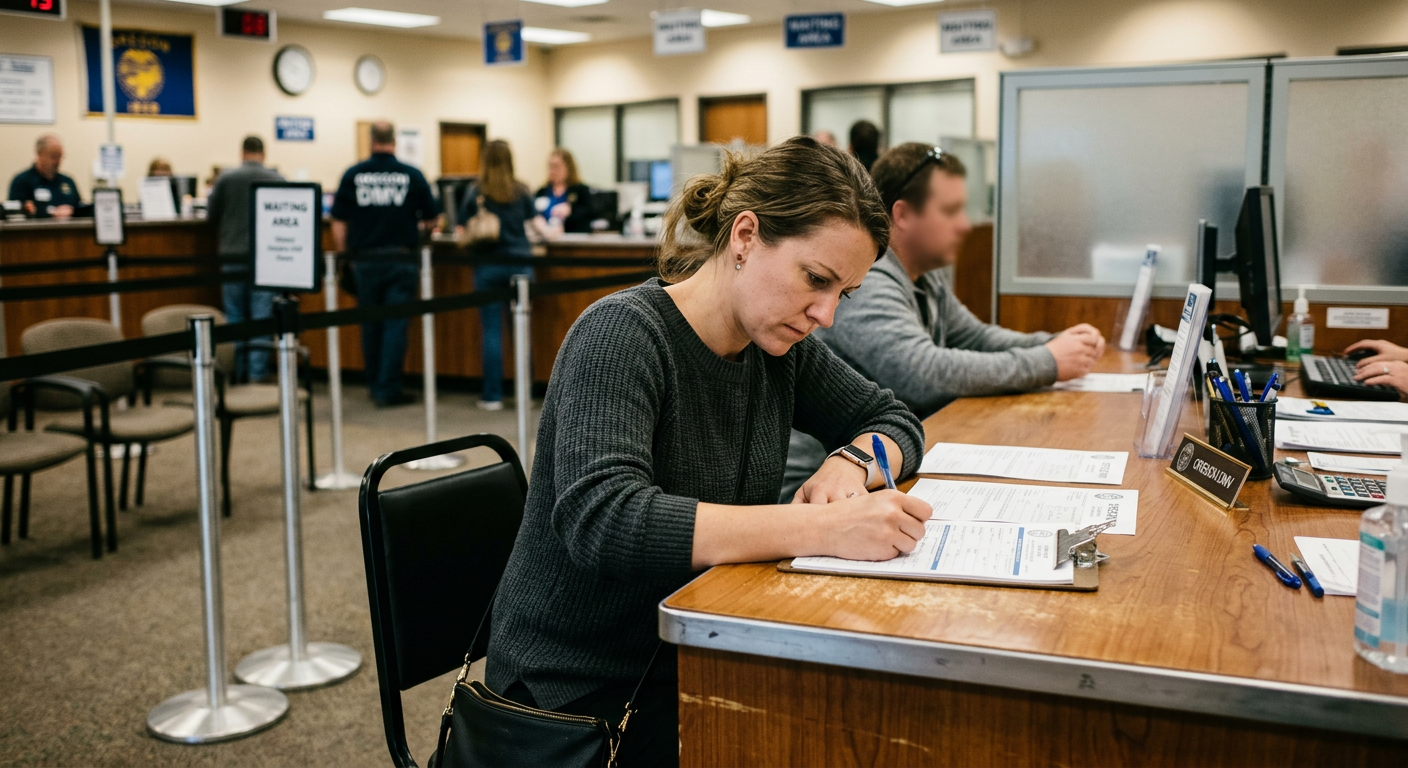
Oregon has no sales tax — you probably already knew that. But it does have a 0.5% use tax on cars brought in from other states. It’s not a major hit. Still, it’s worth knowing before you go to the DMV.
One more perk: Oregon only requires DEQ emissions testing in the Portland metro area. Salem doesn’t need it. So if you spent years dealing with California smog checks, that’s one thing off your list.
Your Oregon Insurance Switchover Checklist
Use this when you’re ready to make the switch:
- ☐ Confirm your Oregon move-in date (this starts the 30-day clock)
- ☐ Pull your current California policy declarations page
- ☐ Gather vehicle info (year, make, model, VIN)
- ☐ Confirm lienholder info if you have a car loan
- ☐ Contact your Oregon insurance agent to start the new policy
- ☐ Make sure PIP and UM/UIM are included — they’re required
- ☐ Register your vehicle at the Oregon DMV within 30 days
- ☐ Get your Oregon driver’s license within 30 days
- ☐ Confirm cancellation of your California policy (after Oregon policy is active)
- ☐ Check whether your renters or homeowners policy needs updating too
Frequently Asked Questions
Can I keep my California insurance after moving to Oregon?
Technically, your California policy has a short-term out-of-state clause. It adjusts to Oregon minimums temporarily. However, it’s designed for travel — not permanent residence. Once you establish Oregon residency, you need an Oregon policy. Keeping a California policy as a resident here puts you at risk of a claim denial.
What happens if I miss the 30-day deadline?
You could be driving without legally valid coverage. Additionally, you may face fines for having out-of-state registration and plates past the required window. So get it done early. There’s no upside to waiting.
Will my rates go up because Oregon requires more coverage?
Probably not. Oregon’s required minimums are higher. But the base rates are typically lower than California’s. As a result, most people coming from California end up with comparable or better coverage at a lower price. Your exact rate depends on your driving record, vehicle, and the coverage limits you choose.
Does my renters insurance from California transfer to Oregon?
Also note: a California renters policy covers you in California only. You’ll need to cancel that policy and start a new Oregon one for your new address. Fortunately, the process is quick and inexpensive.
We Help New Oregonians Every Week
If you want to sort out the insurance question while you’re at it, Christian Sammons has been on Portland Road for 24 years. His team is bilingual. You can call (503) 390-5343 or go to sammonsagency.com. They’ll give you a straight answer.
We’re at 4660 Portland Rd NE, #102 in Salem. Bring your California policy pages. We’ll put everything side by side and get you set up right.
More to Read
- Moving to Salem? Your Full Insurance Checklist
- Car Insurance in Salem, Oregon
- Home Insurance in Salem
- Is Renters Insurance Needed in Oregon?
- Oregon SB 1540 Wildfire Discounts
Christian Sammons is a State Farm Insurance Agent in Salem, Oregon. He has served the valley since 2001. His office is at 4660 Portland Rd NE, #102, Salem, OR 97305.
Disclaimer: This article is for general informational purposes only and does not constitute legal, financial, or insurance advice. Coverage options, rates, and requirements may vary based on individual circumstances. Oregon insurance laws and regulations are subject to change. For personalized advice about your specific insurance needs, please contact a licensed insurance agent. Christian Sammons is a State Farm Insurance Agent licensed in Oregon, Washington, and California. State Farm, Bloomington, IL.
Leave a Reply